

BREAKING: Former Army intelligence officer identified as witness in Colorado Springs UAP case described in recently released FBI records
The PURSUE UAP files third release had four pdfs about a 2022 UAP sighting witnessed by five U.S Army service members at Fort Carson in Colorado.
In the last year prior to the release, a former Army Special Forces intelligence officer, combat veteran and MIT Sloan graduate named Caison Best engagded in a series of interviews describing a UAP sighting which he reported to Americans for Safe Aerospace that sounded very similar to the incident described in the PURSUE documents. (News Nation)
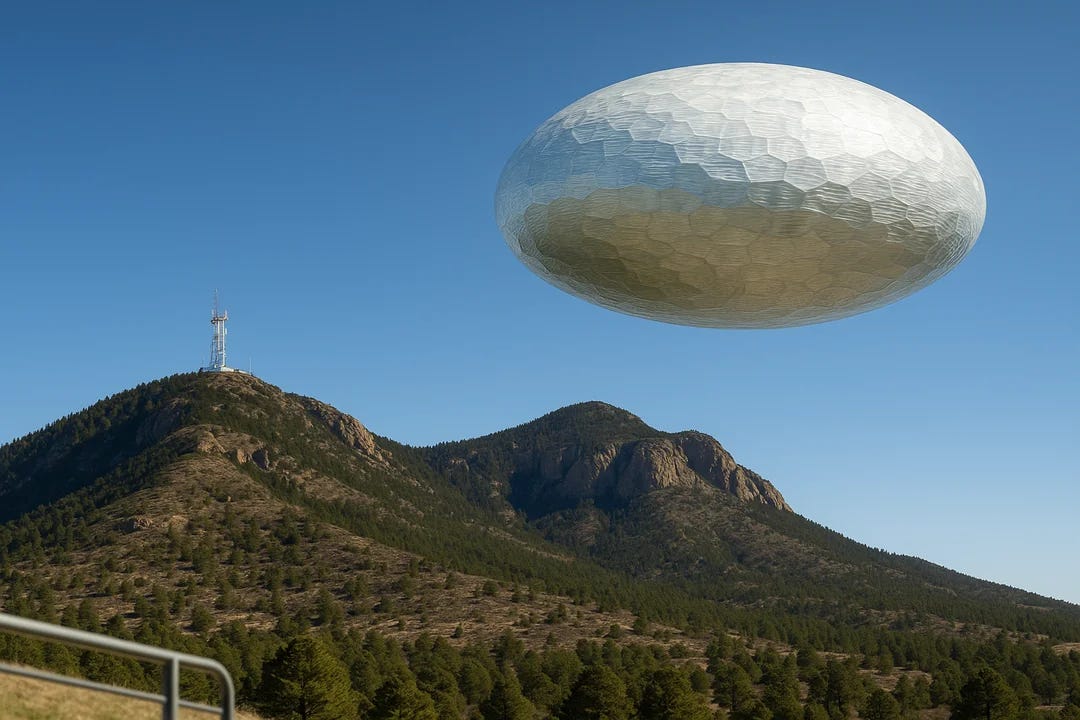
Both involved a 2022 sighting at Fort Carson of a massive, silent object hovering over or near Cheyenne Mountain that appeared like a reflective “potato” covered in an angular polygonal pattern.
Ryan Graves, the former Navy fighter pilot and founder of ASA, confirmed in a phone call that Best was one of the witnesses connected to the Colorado Springs UAP case.
Graves did not want to provide a further statement at that time.
Best speculated in his interviews that the object’s appearance near Cheyenne Mountain may be significant because of the area’s role in U.S. military nuclear-warning and command infrastructure, placing it in the broader context of UAP reports near sensitive nuclear-related sites.
There also may have been a local witness in Colorado Springs who saw a similar object in the same month.
More on both below.
The Sighting: A Crystalline Potato
The intelligence-community analysis document described an airborne object seen over Cheyenne Mountain, Colorado, by five U.S. Army service members at Fort Carson on Feb. 15, 2022.
The object was roughly six miles west of the witnesses, over or slightly behind the Cheyenne Mountain silhouette, and appeared stationary about 300 to 500 feet above the mountain for roughly 30 to 180 seconds.
The witnesses described it as an angular, non-symmetrical “potato” made of uneven panels, with a shimmering white appearance and defined edges. (ICA Analysis)
Best’s public accounts tracked closely with that description.
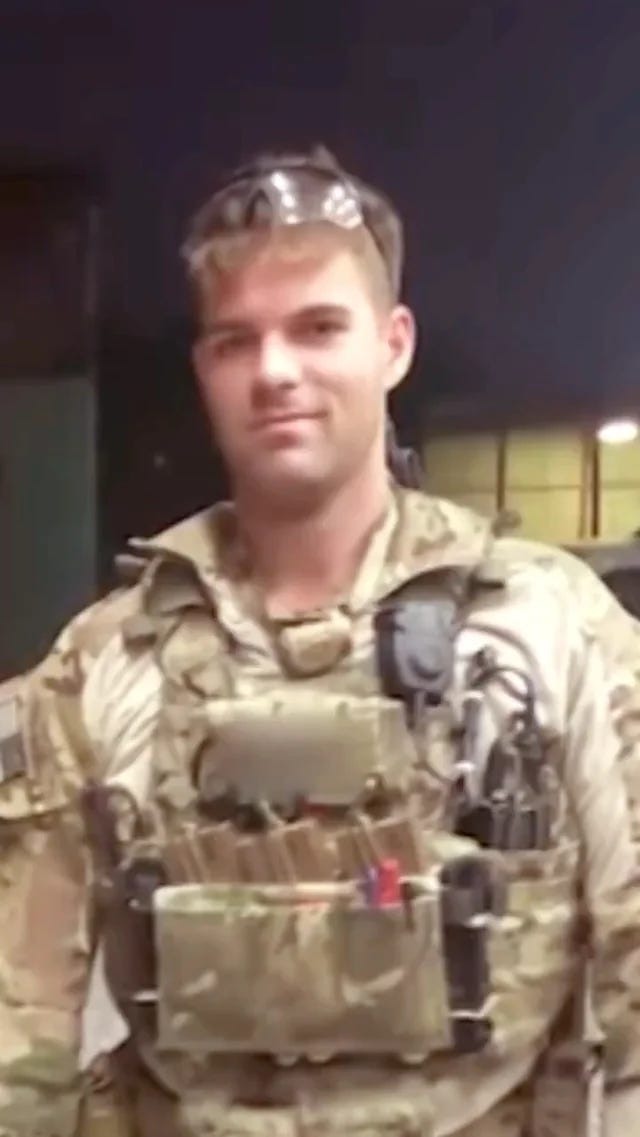
In his Sept. 2 NewsNation interview, Best said he and four other service members saw a massive, white or mother-of-pearl object over Cheyenne Mountain while walking between secure facilities for an intelligence briefing.
He placed it near the mountain’s saddle, close to an antenna array, and said Cheyenne Mountain was about six miles away. (NewsNation / Reality Check interview, Sept. 2, 2025)
In his Nov. 4 interview with Chris Lehto, Best said he was serving with the 10th Special Forces Group as an intelligence officer and was walking with his second-in-command and three intelligence analysts from their battalion headquarters to the Special Forces Group headquarters for a snap intelligence briefing.
Russia’s full-scale invasion of Ukraine was days away, he said, and the briefing was one of the most important of his career. (The Lehto Files interview, Nov. 4, 2025)
When they reached the top of a hill, Best said, Cheyenne Mountain came into view.
The object was already there.
He told Lehto it was generally elliptical, but not symmetrical, and looked “like it was painted in the sky.”
The body of the object remained motionless, he said, while its surface appeared to move. “The edges of the objects were kind of like oscillating,” Best told NewsNation.
He compared the motion of the panels to ripples moving across a still pond after pebbles had been dropped into it.
The FBI forensic-sketch document also corresponds closely with Best’s account.
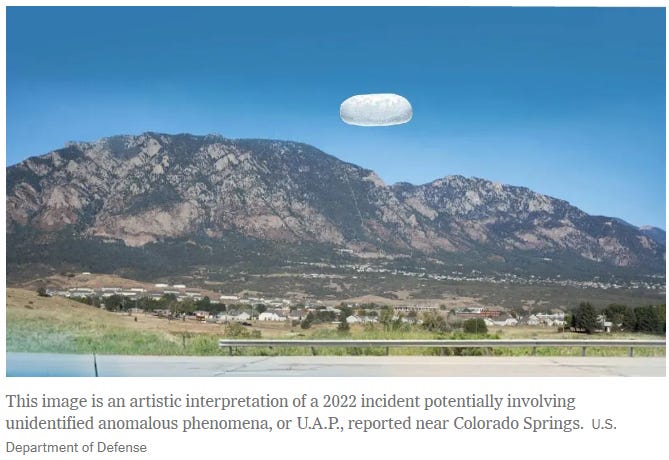
It describes a former U.S. Army intelligence officer and four other members of his unit observing a UAP over Cheyenne Mountain at approximately 11:25 a.m.
The object is described as “potato” shaped, creamy or whitish, opalescent or translucent, with distinct edges and articulating non-overlapping panels.
The document says the object was perfectly still, while the panels shifted in slow waves starting at different points at the same time. (Forensic Sketch Interview)
An FBI FD-302 interview report described the phenomenon as matte white or off-white, oval or bean-shaped, non-metallic, completely motionless and silent hovering just over Cheyenne Mountain, in a low point or saddle in the mountain.
The report says it was covered in intersecting lines or ridges forming an abstract polygon pattern across the entire object.
It said the sighting lasted 3-5 miuntes. (FBI FD-302)
The report also says none of the five men had a phone with them.
Best has said the same thing in both interviews: they were moving between secure facilities, or SCIFs, and did not have phones and therefore did not take a picture of the phenomenon.
The disappearance was also consistent across the accounts.
The FBI report said the group looked away while discussing whether someone should return to a vehicle to get a phone. When they looked back, the object was gone.
Best told Lehto he did not see it fly away, dissolve, dip behind the mountain or accelerate. It was simply there, then it was not.
Best told NewsNation that he and some of the other witnesses later checked Reddit and local news because they expected someone else might have seen it. They did not find anything.
There was a similar sighting in November 2022.
UFO sighting 173379 reported to the National UFO Reporting Center described an “[e]normous object, looked like a rock, miles long,” according to the sighting report. (NUFORC 173379)
The witness was driving home from work in the dark. They saw dull white lights.
The phenomenon “looked like a rock. With dull white lights. Little to no noise. It was massive. I pulled over,” according to the report. “Honestly I was terrified. I didn’t try to take a pic … it was slow moving, and went in the direction of Cheyenne mountain. Other people must have seen this. It was f—ing enormous.”
The sighting lasted 8 minutes, according to the report.
The NUFORC report said that sighting happened on “2022-11-29 19:50 Local - Approximate” and was reported on “2022-12-12 12:27 Pacific.”
Best also said he documented the sighting shortly after it occurred.
In the Lehto interview, he said he made a PowerPoint the next day with about four slides, including his notes, a simple graphic representation of the object, a photo from the place where the group had been standing and input from several of the other witnesses.
One member of the group, Best said, refused to engage with the sighting afterward.
“This did not happen,” Best recalled the person saying. “I don’t want to hear about this. I don’t want to participate … everybody else was happy to participate” with the FBI investigation.
The FBI report said the witnesses later independently drew what they remembered and compared the drawings.
According to the report, the drawings were consistent in showing a horizontal, white, bean-shaped object with abstract lines crossing it. (FBI FD-302)
The Reporting Process: From ASA to AARO to the FBI to PURSUE
Best said the sighting did not immediately become an official report because he did not know where to take it.
“Not much of anything,” he told NewsNation when asked what he did afterward.
He said government buildings had signs and flyers telling personnel where to report many kinds of problems, but he had never seen one explaining where to report a UAP.
He said several members of the group later searched classified systems for guidance but could not find it.
Best said that changed after he returned from his final deployment and reached out to Ryan Graves at Americans for Safe Aerospace, a nonprofit founded by Graves to focus on UAP transparency, aviation safety and national-security concerns. (Americans for Safe Aerospace)
Best said he had seen Graves on a podcast, found him credible and asked where he should take the report.
“I initially reported to ASA, and then he directed me to some emails associated with AARO,” Best told NewsNation, referring to the Pentagon’s All-domain Anomaly Resolution Office. (AARO)
Best said he sent AARO his written statement and the PowerPoint he had prepared after the sighting.
He said the office later contacted him, but his description of that process was limited and frustrated.
In the Lehto interview, Best said an AARO engineer reached out through LinkedIn for a short conversation, and that AARO later emailed his MIT account with an image of a PTDS-style surveillance balloon as a possible explanation.
Best rejected that comparison.
He told NewsNation he had seen PTDS-style surveillance balloons “hundreds of times” in deployed environments and near the U.S.-Mexico border.
“I know what a surveillance balloon in the sky looks like,” he told Lehto. “It was absolutely not” that.
Best said Graves also connected him with FBI contacts.
He described that process as “night and day” compared with AARO.
The Bureau, he said, quickly brought him into a field office for a formal debrief and interview and brought in a sketch artist to capture what he saw, according to the NewsNation interview.
The PURSUE records appeared to reflect that FBI process. The release included an FBI FD-302 interview report, an FBI forensic-sketch document and a digital-rendering file connected to the Colorado Springs sighting.
The intelligence-community analysis did not conclude the object was exotic technology.
It assessed, with low confidence, that the object may have been sunlight backscattering from snow-covered ground into clouds.
The analysis said no anomalous data or characteristics were recorded or assessed, and said the event did not represent an unknown adversarial capability.
But the explanation was hedged.
The analysis noted uncertainty about each witness’s field of view, snow cover, cloud cover and the exact positioning needed to produce the effect.
It also said no aircraft or balloons were noted active in or around Cheyenne Mountain during the time of the observation.
Best’s account also raises a second issue: whether any military, intelligence or aerospace-warning systems recorded the object.
Cheyenne Mountain is not just another landmark.
The Cheyenne Mountain Complex is historically associated with NORAD and aerospace warning, and Best told NewsNation he assumed that if any site in America would have its airspace under control, it would be Cheyenne Mountain.
He said he did not immediately report the event partly because he assumed “somebody knows what’s going on.” (NORAD Cheyenne Mountain Complex)
“You wouldn’t allow just any incursion with a drone or a blimp or any kind of aircraft without it being authorized as a military authorized aircraft incursion,” Coulthart said.
“Absolutely … Cheyenne Mountain Space Force Base complex is, I would say, probably top five most important and secure facilities we have,” Best said.
The released records do not include radar data, base-security camera footage, FAA data, NORAD/NORTHCOM data, Fort Carson range-control records or civilian reports from Colorado Springs. (PURSUE UAP Files, Release 03)
The Nuclear Connection
The location is one reason the case lands inside a larger historical debate about UAP near sensitive military and nuclear-related infrastructure.
The Colorado Springs records do not state that nuclear weapons were involved.
Fort Carson and the 10th Special Forces Group are not described in the records as having a nuclear mission.
Best also told NewsNation that he and his unit did not have day-to-day interaction with Cheyenne Mountain.
Still, Cheyenne Mountain has obvious nuclear-command relevance.
Best called it “a critical piece of infrastructure” from a nuclear-security standpoint.
Ross Coulthart also framed the question in relation to strategic warning and nuclear conflict, asking whether alerts were ongoing because of the pre-Ukraine-invasion moment.
Best answered that he imagined Cheyenne Mountain may have been on some heightened alert status, but said nothing like that was discussed with him.
The broader UAP-nuclear connection has been discussed for decades.
In the book Clear Intent, Lawrence Fawcett and Barry Greenwood wrote about U.S. government UFO records, including 1975 incidents involving missile bases and nuclear storage facilities.
The book also reproduces or summarizes declassified records involving UFO reports routed through military and intelligence channels, including NORAD and the FBI. (Clear Intent)
Robert Hastings’ book UFOs and Nukes argues that UAP have repeatedly appeared near nuclear weapons sites, including Sandia, Kirtland Air Force Base and the Manzano Weapons Storage Area in New Mexico.
Hastings cites declassified reports and witness accounts involving Sandia Base, Kirtland and nuclear-weapons storage or assembly areas, including a 1980 incident near the Manzano Weapons Storage Area in which security personnel reported unusual lights and a disk-shaped object near a restricted test range used by the Air Force Weapons Laboratory, Sandia Laboratories, the Defense Nuclear Agency and the Department of Energy. (Robert Hastings, UFOs and Nukes)
The second PURSUE release also included historical documents connecting UAP sightings to nuclear sites such as PANTEX and Sandia Base, Los Alamos and others. (PANTEX)
Modern UAP figures have made similar claims about UFOs and nuclear technology.
Luis Elizondo, the former Pentagon official associated with AATIP, told The Washington Post in 2021 that there appears to be “some sort of intersection” between UAP sightings and nuclear technology, including propulsion, power generation and weapons systems.
He also said there were U.S. incidents in which UAP interfered with nuclear capabilities. (Washington Post Live transcript, June 8, 2021)
The Colorado Springs area is no stranger to UAP reports.
Public sighting databases and local news archives include scattered reports around Colorado Springs, Fort Carson, Cheyenne Mountain and NORAD, though none are known to be connected to Best’s.
In 2022, NUFORC published a Colorado Springs report from a witness who said they saw a stationary “star” between Peterson Space Force Base and Cheyenne Mountain Space Force Station in 2021. (NUFORC Sighting 173310)
KKTV 11 reported that strange lights were seen over Colorado Springs by multiple witnesses in April 2023.
A witness described the lights as “UFOs man. Dude, I guarantee it, UFOS and aliens,” according to KKTV11.
“A spokesperson with Fort Carson tells 11 News they were flare rounds used as part of training. No other details were shared,” according to KKTV11. (KKTV11)
The Denver Gazette reported the November 2022 Colorado Springs UFO report involving a large object the witness compared to a rock mentioned above. (The Denver Gazette)
Older UFO literature also includes Colorado Springs and Fort Carson references, but with limits.
Robert Hastings’ UFOs and Nukes does not appear to describe a Fort Carson or Cheyenne Mountain case; its closest Colorado Springs reference is a citation to a 1977 Colorado Springs Gazette Telegraph article in a chapter on cattle mutilations.
If UAP are attracted to sites connected to nuclear technology including the area around Colorado Springs, the question remains: what are they?
David Grusch, the former Air Force and National Geospatial-Intelligence Agency official who testified before Congress in 2023, was not involved in the Colorado Springs case, but his testimony helped move UAP claims from podcasts and documentary culture into formal congressional proceedings.
Grusch testified that he had been told by multiple current and former military and intelligence officials that the U.S. government was operating with secrecy above congressional oversight regarding UAP, and that he had been informed of a multi-decade UAP crash-retrieval and reverse-engineering program and that some UAP involve nonhuman intelligence. (House Oversight UAP hearing, July 26, 2023; Grusch opening statement)
The NIMITZ Incident Comparison
Graves became prominent in the UAP issue after reporting the 2014–2015 East Coast Navy encounters, in which pilots in his squadron repeatedly saw or detected objects in restricted training airspace over multiple days.
In his 2023 House testimony, Graves said he had witnessed UAP on multiple sensor systems as a Navy pilot and that UAP are a national-security and aviation-safety problem.
He said the most compelling cases involve multiple witnesses, multiple sensors, supporting documentation or a roadmap to find it. (Graves written testimony)
That description also explains why the Colorado Springs case is notable.
It does not have a known video. It does not have publicly released radar. But it does have multiple military witnesses, an intelligence officer willing to speak publicly, contemporaneous or near-contemporaneous internal documentation described by the witness, FBI interview records, a forensic sketch process and an intelligence-community analysis.
That is why the comparison to the Nimitz case is useful, though limited.
The 2004 Nimitz case became important because it was not simply one pilot telling a strange story. It involved multiple trained military witnesses, radar operators, a nuclear-powered Navy carrier strike group, later-public video and years of persistence before the event was taken seriously in mainstream public life.
Former Navy commander David Fravor testified before Congress that his 2004 encounter occurred while his flight was operating from the USS Nimitz and being controlled by the USS Princeton. (Fravor written testimony; House Oversight UAP hearing, July 26, 2023)
The Colorado Springs case is not the Nimitz case. There is no public video. The apparent object was seen from the ground, not intercepted in the air. It happened briefly, not over multiple days. The government analysis offers a possible prosaic explanation, however tentative.
But the structure is familiar: trained military witnesses, a sensitive military context, unclear reporting channels, government records that do not fully settle the case and a public witness who says the official explanation does not match what was seen.
Best Joined Americans for Safe Aerospace
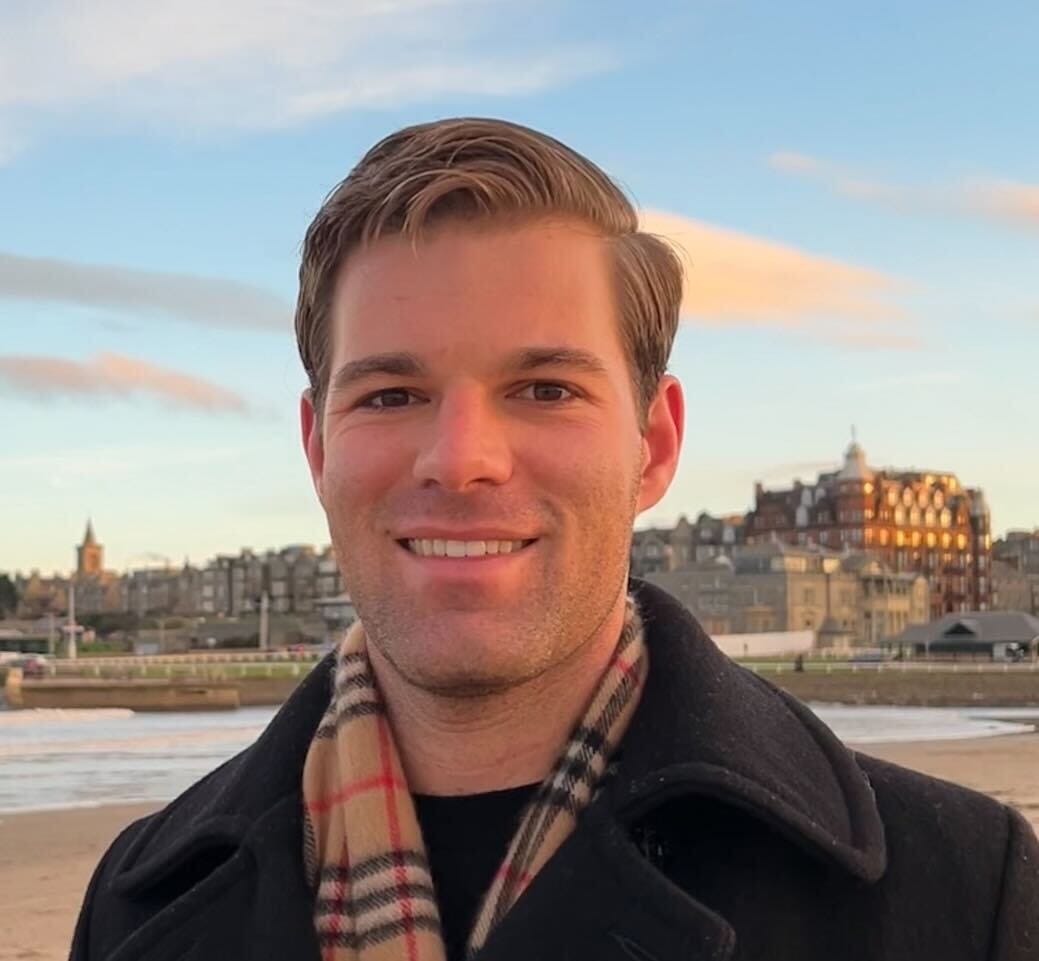
Best eventually became involved with Americans for Safe Aerospace, the organization Graves founded to support UAP witnesses and push for safer reporting mechanisms.
In his NewsNation interview, Best said Graves asked him to help run ASA’s witness reporting program after Best himself had gone through the reporting pipeline, spoken with AARO and the FBI and understood what professional witnesses face when deciding whether to report.
That pipeline now loops back into the Colorado Springs case.
The PURSUE release provides records. Best’s two interviews provide a named witness and firsthand narrative. Graves’ confirmation connects the witness to the records.
What remains unknown is what the object was, whether it was tracked by any military or civilian system, whether anyone outside Fort Carson saw it and whether the four other witnesses will ever speak publicly.
For now, the Colorado Springs case sits in the uncomfortable middle ground where many consequential UAP cases live: better documented than rumor and needing more documentation to be resolved.
Written by RM McLaren